
Used Car Loan for Private Seller: Bad Credit Options
A used car loan for private seller bad credit is possible. See which lenders allow it, what documents you need, and how to close the deal without a dealer.

By Hannah Nguyen
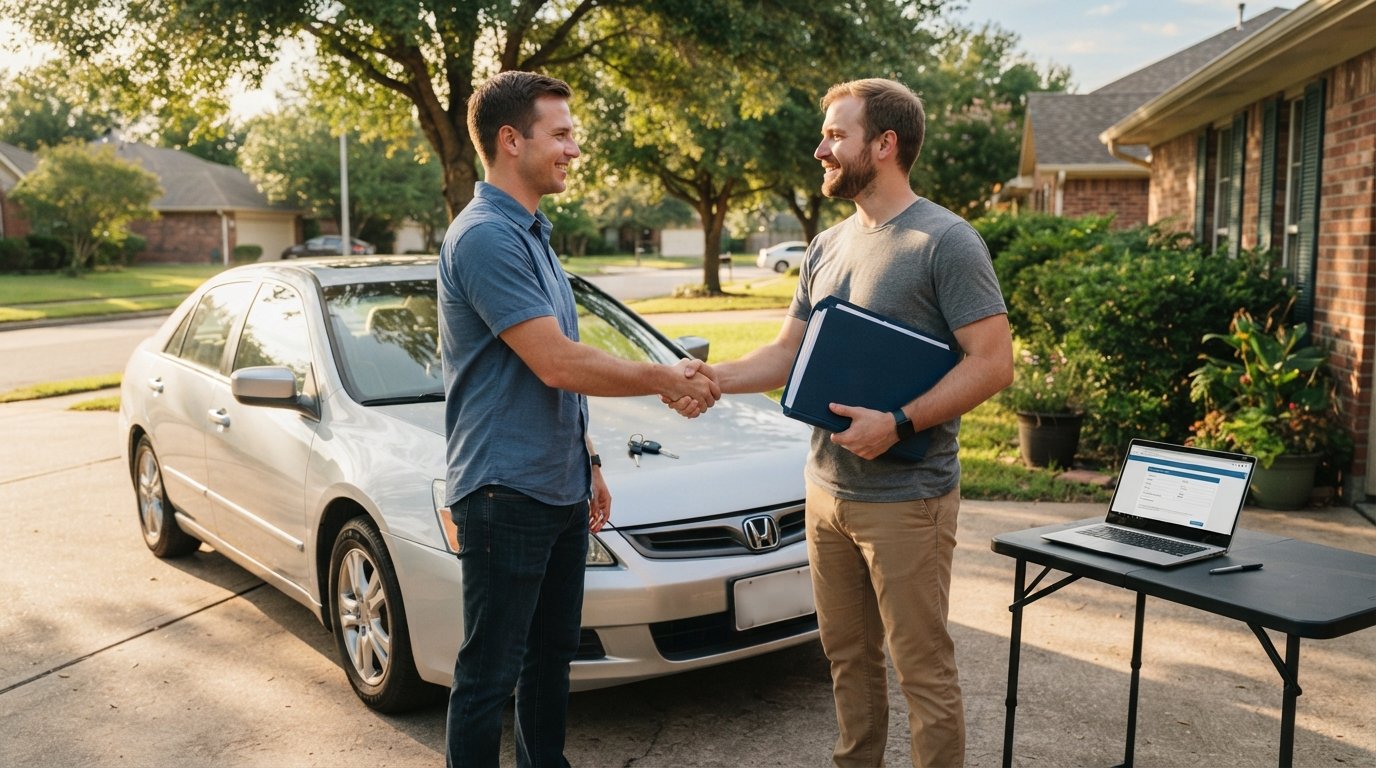
You found the perfect used car, the seller is ready to shake hands, and the price fits your budget. Then the financing question lands: can you actually get a used car loan for a private seller with bad credit? The short answer is yes, but the path looks different from a dealership purchase. Private-party sales remove the dealer from the equation, and that changes how lenders evaluate risk, how paperwork gets handled, and how quickly funds reach the seller. Understanding these mechanics before you promise anyone a sale price is the difference between a smooth transaction and a deal that falls apart at the title office.
This guide walks through the real obstacles lenders see in private sales, which types of lenders tend to approve them, and the exact sequence of steps to secure money and drive away with the keys. If your credit history includes collections, a past bankruptcy, or simply no score at all, the strategies below are built for your situation, not for someone with an 800 score and a blank check from a credit union.
Why Private Seller Loans Are Harder to Get With Bad Credit
When you buy from a dealership, the dealer often has a finance department that works with dozens of lenders. That dealer can submit your application to multiple banks, handle the title paperwork, and sometimes act as a guarantor of sorts because the lender trusts the dealer's documentation. A private seller offers none of that infrastructure. The lender must verify the vehicle's condition, confirm the seller actually owns it free and clear, and trust that a stranger will sign over the title correctly. For a borrower with bad credit, that added uncertainty makes lenders more cautious.
There is also the matter of collateral. In a private sale, the lender cannot easily repossess the vehicle if you stop paying because the seller is not a business with a lot full of cars. Some lenders avoid private-party transactions entirely for this reason. Others will finance them but charge higher interest rates or require larger down payments to offset the risk. That does not mean approval is impossible, but it does mean you should expect stricter documentation and a narrower pool of willing lenders.
The good news is that the used car market is enormous, and many buyers with credit challenges successfully finance private purchases every day. The key is knowing where to look and how to present your application in the best possible light.
Which Lenders Actually Finance Private Seller Transactions
Not every lender will touch a private-party sale, so your first job is to filter for institutions that explicitly allow it. Here are the main categories and what each typically requires.
- Online connection services: Platforms that match borrowers with a network of lenders often include private-sale financing among their options. These services are built for people who have been turned down elsewhere, so they tend to have more flexible credit criteria. StartAutoLoan connects applicants with lenders who work with bad credit and no credit situations, and the application process is designed to surface offers without obligating you to accept any of them.
- Credit unions: Many credit unions offer private-party auto loans, especially to members. If you have a relationship with one, even a small savings account, ask about their used car loan programs. They may be more willing to overlook past credit issues if you have a steady income and a reasonable down payment.
- Online banks and fintech lenders: Some digital lenders specialize in used car financing and accept private seller transactions. They often use alternative data and manual underwriting, which can help if your credit report tells an incomplete story.
- Buy-here-pay-here dealers (indirect): While these are dealerships, some will facilitate a private purchase if they act as an intermediary. This is less common and usually costs more, but it is an option worth asking about if other routes stall.
Each lender will have its own requirements, but common ones include a clean title in the seller's name, a bill of sale, proof of insurance, and a vehicle inspection. Some also cap the age or mileage of the car they will finance. Always confirm these details before you fall in love with a car, because a lender's vehicle restrictions can kill a deal even if your credit is approved.
Step-by-Step: How to Secure Financing and Complete the Purchase
The sequence matters. If you negotiate with a private seller before you know your financing limits, you risk wasting everyone's time or losing a good car to another buyer. Follow this order to keep the process efficient.
- Get pre-approved before you shop. Submit an application through a connection service or a lender that allows private-party sales. You will need to provide your income, identity, and basic vehicle details if you already have a specific car in mind. Pre-approval tells you the maximum amount you can borrow, the down payment required, and the interest rate range. It also gives you leverage with sellers because they know you are a serious buyer.
- Confirm the vehicle qualifies. Once you find a car, ask the lender if it meets their criteria. Most lenders will not finance vehicles older than a certain age, with salvage titles, or with unusually high mileage. Get the VIN and ask for a pre-purchase inspection. A mechanic's report protects you and can sometimes satisfy a lender's inspection requirement.
- Negotiate with the seller and sign a bill of sale. A proper bill of sale includes the vehicle identification number, sale price, date, and signatures from both parties. Some states require a specific form, so check your local rules. The bill of sale is a key document for the lender, so make sure it is complete and accurate.
- Submit the final paperwork to your lender. This typically includes the signed bill of sale, the seller's title (or a copy), proof of insurance listing the lender as lienholder, and your income verification. The lender may also want a photo of the odometer and the vehicle's condition. Once everything is in order, the lender issues a check or arranges a direct transfer to the seller.
- Complete the title transfer and registration. The seller signs the title over to you, and the lender's lien is recorded. You will register the vehicle and pay any taxes or fees. Do not skip this step: a missing lien notation can create problems later, and driving without proper registration is illegal.
One common pitfall is assuming the seller will wait while your financing goes through. Private sellers often have other buyers lined up, so explain your timeline upfront and keep the lender's process moving. If you are pre-approved, you can often close within a few business days, which is fast enough for most sellers.
If you want a sense of what interest rates to expect given your credit profile, our guide on used car loan rates for poor credit breaks down typical ranges and the factors that push rates higher or lower.
Documents and Requirements You Should Prepare
Bad credit applications often require more documentation because lenders want to verify stability. Gathering these items in advance speeds up the process and shows you are organized. Requirements vary by lender, but here is a checklist that covers most situations.
- Proof of identity: Driver's license or state ID, and sometimes a Social Security number.
- Proof of income: Recent pay stubs, bank statements, or tax returns if you are self-employed. Lenders want to see that you can afford the payment.
- Proof of residence: A utility bill or lease agreement in your name.
- Vehicle information: VIN, mileage, and a description of the car's condition.
- Insurance: Proof of comprehensive and collision coverage, which most lenders require for financed vehicles.
- Down payment: Even a modest down payment, such as 10 to 20 percent, improves approval odds and reduces the amount financed.
If you have a past bankruptcy, be ready to explain it and show that you have rebuilt some stability since then. Lenders are often more interested in your recent payment history and income than in events from several years ago. A short written explanation can help a manual underwriter see the full picture.
How to Improve Your Approval Odds With Bad Credit
Bad credit is not a permanent label, and there are concrete steps you can take to make a lender say yes. Start with your credit reports from all three major bureaus and dispute any errors you find. Mistakes are common and can drag down your score unnecessarily. Paying down high credit card balances also helps because it lowers your credit utilization ratio, which is a major scoring factor.
If you cannot improve your score quickly, focus on compensating factors. A larger down payment reduces the lender's risk. A newer vehicle with lower mileage is easier to finance. A co-signer with good credit can sometimes turn a denial into an approval, though you should both understand the risks before signing. Finally, applying through a connection service that works with multiple lenders increases your chances of finding one whose criteria match your profile. A single lender might say no, but a network gives you more chances to find a yes.
It also helps to be realistic about the vehicle you choose. A private seller car that is ten years old with 150,000 miles may be affordable, but many lenders will not finance it. Look for vehicles that are seven years old or newer and under 100,000 miles if possible. That range keeps more lenders interested.
Common Mistakes to Avoid in a Private-Party Purchase
The flexibility of a private sale is also its risk. Without a dealer's compliance department, you are responsible for making sure the paperwork is correct. One frequent error is handing over cash before the title is verified. Always confirm that the seller's name matches the title and that there are no liens listed. A lien means another lender has a claim on the car, and you could lose money if the seller does not pay it off.
Another mistake is skipping the inspection to save time. A pre-purchase inspection by an independent mechanic costs a small fee and can reveal problems that would make the car ineligible for financing or too expensive to own. Lenders may also require an inspection, so doing it early avoids delays. Finally, do not lie on your application about income or down payment sources. That is fraud, and it can lead to loan denial, higher rates, or legal trouble. Honesty combined with a realistic plan is the best strategy.
If you are ready to see what offers are available, start by requesting quotes from a platform that understands bad credit and private sales. You can apply with no obligation and compare options before you commit to a car or a loan.